Uncategorized

The Importance of Google Ads.?

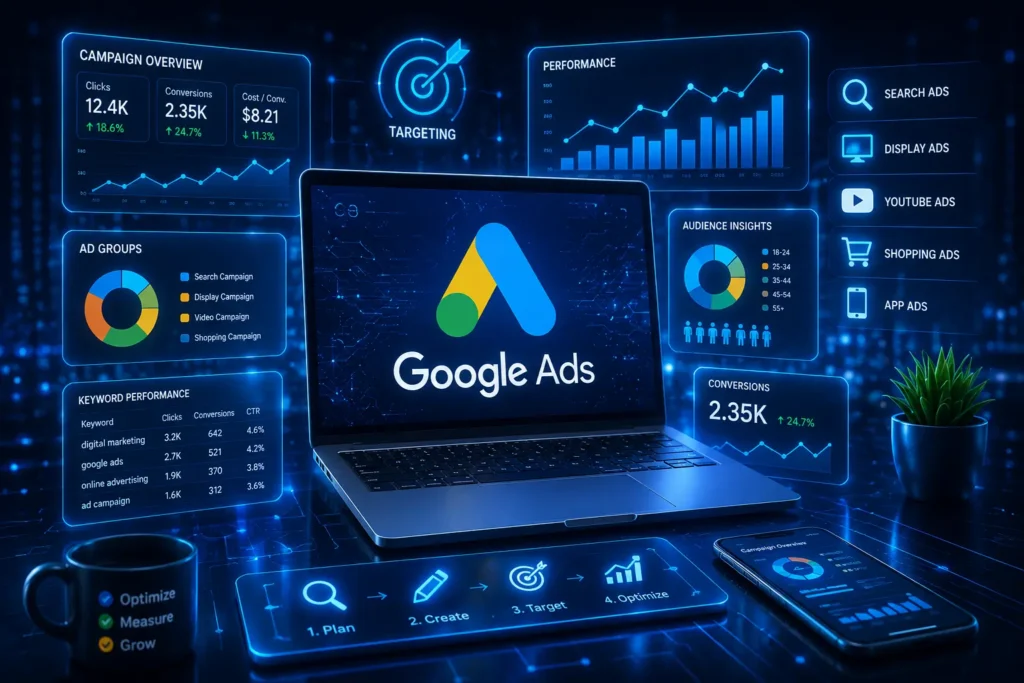
In today’s digital-first world, businesses of all sizes are competing for the attention of online consumers. While organic strategies like SEO are vital for long-term growth, they take time to deliver results. This is where Google Ads steps in — offering businesses an immediate, powerful, and highly targeted way to reach potential customers. Google Ads is one of the most important digital marketing tools available today, and understanding its significance can make a transformative difference for any business or brand. What Are Google Ads? Google Ads (formerly known as Google AdWords) is an online advertising platform developed by Google. It allows businesses to display ads across Google’s vast network — including Google Search, YouTube, Gmail, Google Maps, and millions of partner websites. Advertisers pay to show their ads to users based on specific keywords, demographics, interests, locations, and behaviors. The platform operates primarily on a Pay-Per-Click (PPC) model, meaning you only pay when someone actually clicks on your ad. 1. Immediate Visibility One of the most significant advantages of Google Ads is speed. Unlike SEO, which can take months to produce results, Google Ads can put your business at the top of search results almost instantly. The moment your campaign goes live, your ads can appear in front of thousands of potential customers. This makes Google Ads especially valuable for new businesses that haven’t yet built organic rankings, or for established businesses launching a new product or promotion that needs immediate attention. 2. Unmatched Reach Google is the world’s most used search engine, handling over 8.5 billion searches every single day. By advertising on Google, you gain access to an enormous and diverse audience. Beyond search, Google’s Display Network reaches over 90% of internet users worldwide through banner ads on websites, apps, and platforms. Whether your target audience is students, professionals, homemakers, or business owners, Google Ads gives you the ability to reach them wherever they are online. 3. Highly Targeted Advertising Perhaps the most powerful feature of Google Ads is its precision targeting. You can define exactly who sees your ads based on a wide range of criteria. Keyword targeting ensures your ads appear when users search for specific terms related to your business. Geographic targeting lets you show ads only to people in specific cities, regions, or countries — perfect for local businesses. Demographic targeting allows you to filter by age, gender, income level, and parental status. You can even target based on user interests, online behaviors, and past interactions with your website through remarketing campaigns. This level of precision ensures your advertising budget is spent on the most relevant audience possible. 4. Cost Control and Flexibility Google Ads is accessible to businesses of every size because it offers complete budget flexibility. You set your own daily and monthly budget limits, and you never spend more than you authorize. Whether you have a budget of five hundred rupees or five lakhs, you can run a Google Ads campaign. The cost-per-click varies depending on competition and keyword demand, but you always remain in control of your spending. You can pause, adjust, or stop campaigns at any time, making it a highly flexible marketing tool that adapts to your needs. 5. Measurable Results One of the biggest frustrations with traditional advertising — such as newspapers, billboards, or television — is the difficulty of measuring its effectiveness. Google Ads eliminates this problem entirely. Every aspect of your campaign is tracked and measurable. You can see exactly how many people saw your ad (impressions), how many clicked it (clicks), what percentage of viewers clicked (click-through rate), how much each click cost (cost-per-click), and most importantly, how many clicks resulted in a sale, sign-up, or inquiry (conversions). This data empowers businesses to make informed decisions and continuously improve their campaigns for better results. 6. Brand Awareness Even when users don’t click on your ad, seeing your business name at the top of search results builds brand recognition and trust. Repeated exposure to your brand name and message creates familiarity, which influences purchasing decisions over time. Google Ads’ Display Network further amplifies this effect by showing visual banner ads across millions of websites, keeping your brand visible to potential customers throughout their online journey. 7. Remarketing Capabilities Google Ads offers a powerful feature called remarketing, which allows you to re-engage users who have previously visited your website but didn’t make a purchase or take action. These users are already familiar with your brand and are more likely to convert compared to new visitors. By showing targeted ads to this warm audience as they browse other websites or use apps, you can bring them back and significantly increase your conversion rates. 8. Competitive Advantage If your competitors are using Google Ads and you are not, they are capturing customers who might otherwise have chosen your business. On the other hand, if you run well-optimized campaigns while your competitors do not, you can dominate search results in your niche. Google Ads levels the playing field, allowing smaller businesses to compete with larger ones by targeting smarter, not just spending more. 9. Supports Business Goals Google Ads is versatile enough to support a wide range of business objectives. Whether your goal is to drive traffic to your website, generate phone calls, increase store visits, boost e-commerce sales, collect leads, or promote a mobile app, there is an ad format and campaign type designed for that specific purpose. This makes Google Ads useful across industries — from retail and real estate to healthcare, education, and hospitality. 10. Integration with Other Marketing Efforts Google Ads works best when used alongside other marketing strategies. Combined with SEO, it ensures you dominate both paid and organic search results. Integrated with Google Analytics, it provides deep insights into user behavior. Used together with content marketing and social media, it creates a comprehensive digital marketing ecosystem that drives consistent, compounding results. Conclusion Google Ads is not just an advertising tool — it is a growth engine. Its ability to deliver immediate visibility,
Uncategorized

What is SEO.?

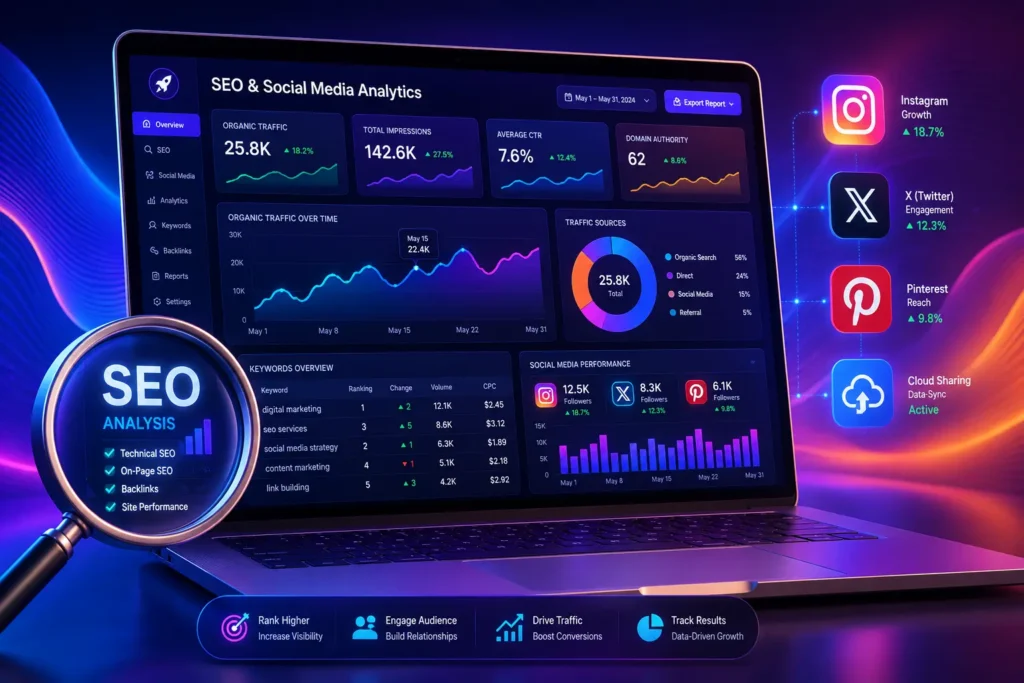
SEO stands for Search Engine Optimization — the practice of improving a website’s visibility in search engine results (like Google, Bing, etc.) to attract more organic (non-paid) traffic. How it works Search engines use automated programs called “crawlers” to scan websites and index their content. They then rank pages based on hundreds of factors to decide which results to show when someone searches for something. SEO is about making your site rank higher in those results. The main pillars of SEO On-Page SEO — optimizing content on your website itself: Using relevant keywords naturally in your content Writing compelling titles and meta descriptions Structuring content with clear headings (H1, H2, etc.) Creating high-quality, useful content Technical SEO — the behind-the-scenes stuff: Fast page load speeds Mobile-friendliness Secure connection (HTTPS) Clean site structure and URLs Proper indexing (sitemaps, robots.txt) Off-Page SEO — building authority outside your site: Getting other reputable websites to link to yours (backlinks) Social signals and brand mentions Online reviews and reputation Local SEO — for businesses targeting a specific area: Google Business Profile optimization Local keywords (e.g., “best café in Malappuram”) Consistent name/address/phone listings Why it matters Free traffic — unlike paid ads, organic traffic costs nothing per click Long-term results — a well-ranked page can bring traffic for years Trust — users tend to trust organic results more than ads Competitive edge — ranking above competitors means more visitors and potential customers A simple example If someone searches “best biryani in Malappuram”, Google picks which restaurants to show based on their SEO. The one with a well-optimized website, good reviews, and relevant content will appear at the top. SEO is a long-term strategy — results typically take weeks to months to show, but the payoff is sustainable, targeted traffic.You said: 1000 WORDS1000 WORDS9:53 AMClaude responded: Search Engine Optimization (SEO): A Complete GuideSearch Engine Optimization (SEO): A Complete Guide Search Engine Optimization, commonly known as SEO, is the process of improving a website’s visibility on search engines like Google, Bing, and Yahoo. When someone types a query into a search engine, a list of results appears. SEO is the art and science of making sure your website appears as high as possible in those results — ideally on the first page. The higher your website ranks, the more likely people are to visit it, which can translate into more customers, readers, or followers depending on your goals. Why SEO Matters Every day, billions of searches are conducted online. People search for products, services, answers to questions, local businesses, tutorials, and much more. Search engines have become the primary way people discover new websites and content. If your website doesn’t appear in search results, you are essentially invisible to a massive audience. Unlike paid advertising, where you pay for every click or impression, SEO generates what is called “organic traffic” — visitors who find your site naturally through search results. This makes SEO one of the most cost-effective long-term marketing strategies available. A well-optimized page can continue attracting visitors for months or even years without any additional investment. For businesses, bloggers, nonprofits, and anyone with an online presence, SEO is not optional — it is essential. How Search Engines Work To understand SEO, you first need to understand how search engines operate. Search engines use automated programs called “crawlers” or “spiders” to browse the internet and collect information about web pages. This information is stored in a massive database called the index. When a user performs a search, the search engine looks through its index and uses a complex algorithm to rank pages based on relevance and quality. Google’s algorithm considers hundreds of factors when ranking pages. These include the relevance of the content to the search query, the quality and authority of the website, the user experience the page provides, and many more technical signals. SEO is about understanding these factors and optimizing your website accordingly. The Four Pillars of SEO 1. On-Page SEO On-page SEO refers to everything you do directly on your website to improve its ranking. The foundation of on-page SEO is keyword research — identifying the words and phrases your target audience uses when searching for topics related to your content. Once you know your keywords, you incorporate them naturally into your page titles, headings, body content, image descriptions, and URLs. Beyond keywords, on-page SEO involves writing high-quality content that genuinely helps the reader. Search engines are getting smarter every year and can distinguish between content that provides real value and content that simply stuffs keywords without offering anything useful. Content should be clear, well-structured, and comprehensive. Meta descriptions — the short summaries that appear under page titles in search results — should be compelling and accurately describe the page content. 2. Technical SEO Technical SEO focuses on the backend structure of your website. Even if your content is excellent, poor technical performance can hurt your rankings significantly. Page speed is a critical factor — websites that load slowly frustrate users, and search engines penalize them. Mobile-friendliness is equally important, as the majority of internet users now browse on smartphones. Google uses “mobile-first indexing,” meaning it primarily evaluates the mobile version of your site. Other technical factors include using HTTPS (a secure connection), having a clean and logical site structure, creating an XML sitemap so search engines can easily find all your pages, and using a robots.txt file to guide crawlers. Fixing broken links, avoiding duplicate content, and ensuring fast server response times also fall under technical SEO. 3. Off-Page SEO Off-page SEO refers to actions taken outside your website that influence your rankings. The most important off-page factor is backlinks — links from other websites pointing to yours. When reputable, high-authority websites link to your content, search engines interpret this as a vote of confidence, signaling that your content is trustworthy and valuable. Building backlinks can be done through various strategies: creating shareable content that others naturally want to link to, guest posting on other blogs or publications, reaching out to

Uncategorized

Why Is Digital Marketing Important?

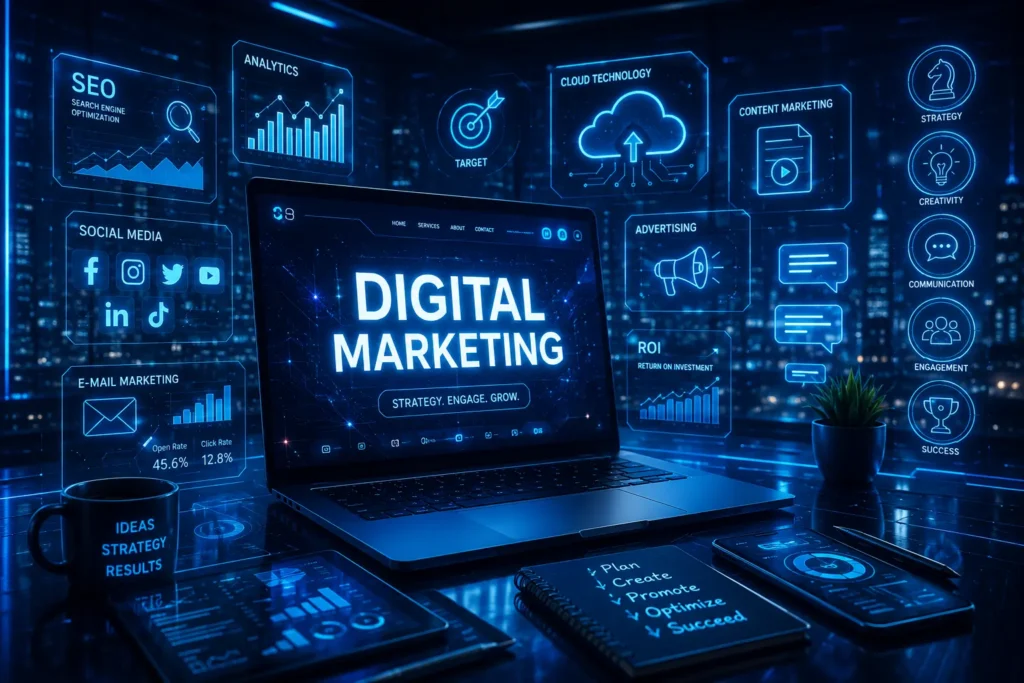
In today’s hyper-connected world, the way businesses reach and engage with their customers has undergone a dramatic transformation. Gone are the days when a newspaper advertisement or a television commercial was enough to sustain a brand’s growth. The internet has fundamentally changed consumer behavior, and with it, the rules of marketing. Digital marketing has emerged not just as an alternative to traditional marketing, but as the backbone of modern business strategy. Whether you are a small local business or a multinational corporation, digital marketing is no longer optional — it is essential. Here is a comprehensive look at why digital marketing is so important in today’s business landscape. 1. Unprecedented Reach and Global PresenceOne of the most powerful advantages of digital marketing is its ability to transcend geographical boundaries. A business based in a small town can now reach customers across the country — or even across the world — with a single well-crafted campaign. Unlike traditional marketing, which is often limited by location and distribution, digital marketing operates on a global scale. Social media platforms, search engines, and email campaigns give businesses access to billions of potential customers at any given time. This kind of reach was previously only possible for large corporations with massive advertising budgets. Today, even startups and small businesses can build a global presence through smart digital marketing strategies. 2. Cost-Effectiveness and Higher ROITraditional marketing channels such as television, radio, and print media are not only expensive but also difficult to measure in terms of return on investment (ROI). Digital marketing, on the other hand, offers incredibly cost-effective solutions for businesses of all sizes. Platforms like Google Ads, Facebook, and Instagram allow businesses to run highly targeted campaigns with budgets as small as a few hundred rupees per day. More importantly, every rupee spent can be tracked, analyzed, and optimized. This means businesses can continuously refine their strategies to maximize ROI. For small and medium-sized enterprises (SMEs), this cost efficiency can be the difference between surviving and thriving in a competitive market. 3. Highly Targeted MarketingOne of the biggest drawbacks of traditional marketing is that it casts a wide net and hopes for the best. A television ad reaches millions of viewers, but only a fraction of them may be genuinely interested in your product. Digital marketing solves this problem through precise audience targeting. Using tools like Google Analytics, Facebook Audience Insights, and customer data platforms, businesses can target users based on age, gender, location, interests, online behavior, purchase history, and much more. This level of precision ensures that your marketing message reaches the people most likely to convert into paying customers, significantly improving efficiency and reducing wasted spend. 4. Measurable and Data-Driven ResultsIn traditional marketing, it is nearly impossible to know exactly how many people saw your billboard or heard your radio ad. Digital marketing eliminates this guesswork entirely. Every campaign, whether it is a social media post, an email newsletter, a paid ad, or a blog article, generates detailed data in real time. Marketers can track metrics such as website traffic, click-through rates, conversion rates, bounce rates, cost per acquisition, and customer lifetime value. This data-driven approach allows businesses to make informed decisions, identify what is working, and quickly pivot away from what is not. The ability to measure results with such precision gives digital marketing a massive edge over any traditional approach. 5. Enhanced Customer Engagement and Relationship BuildingDigital marketing creates opportunities for two-way communication between businesses and their customers. Social media platforms allow brands to interact directly with their audience through comments, messages, polls, and live sessions. Email marketing enables personalized communication at scale. Content marketing through blogs, videos, and podcasts helps brands build authority and trust over time. This continuous engagement builds stronger relationships with customers, increases brand loyalty, and encourages repeat business. In an era where consumers expect personalized and responsive experiences, digital marketing provides the tools to deliver exactly that. 6. Levels the Playing Field for Small BusinessesBefore the digital age, large corporations dominated the marketing landscape simply because they had the budgets to do so. Digital marketing has democratized the playing field. A well-optimized website, a strong social media presence, and a smart content strategy can help a small business compete effectively with much larger competitors. Search engine optimization (SEO), for instance, allows smaller businesses to rank alongside or even above larger brands on Google search results — all without spending a fortune. Creativity, consistency, and a deep understanding of the target audience often matter more than budget in the digital world. 7. Flexibility and Real-Time AdaptabilityThe business environment is constantly changing, and marketing strategies must be agile enough to keep up. Digital marketing offers unmatched flexibility. If a campaign is not performing well, it can be paused, adjusted, or replaced within minutes. If a trending topic presents an opportunity, a business can create and publish relevant content the same day. This real-time adaptability is impossible with traditional marketing, where campaigns are often locked in weeks or months in advance. The ability to respond quickly to market changes, consumer feedback, and competitor activity gives digitally active businesses a significant competitive advantage. 8. Supports Business Growth at Every StageWhether a business is just starting out or looking to scale, digital marketing supports growth at every stage. In the early stages, it helps build brand awareness and attract the first customers. As the business grows, it enables customer retention through email marketing and loyalty programs. At a mature stage, advanced analytics and automation tools help optimize operations and maximize profitability. Digital marketing is not a one-size-fits-all solution — it is a scalable, customizable toolkit that evolves with your business needs. ConclusionDigital marketing is important because it meets customers where they already are — online. It offers businesses the ability to reach wider audiences, spend smarter, engage more meaningfully, and grow faster than ever before. In a world where consumer attention is increasingly shifting to digital

Scroll to Top